Retreat planning / 6 min read
Corporate retreat itinerary: a midweek agenda that wins the booking
A worked example of a two-night midweek corporate retreat agenda, from event space access at midday to a private chef dinner, and what the detail tells venues about corporate demand.
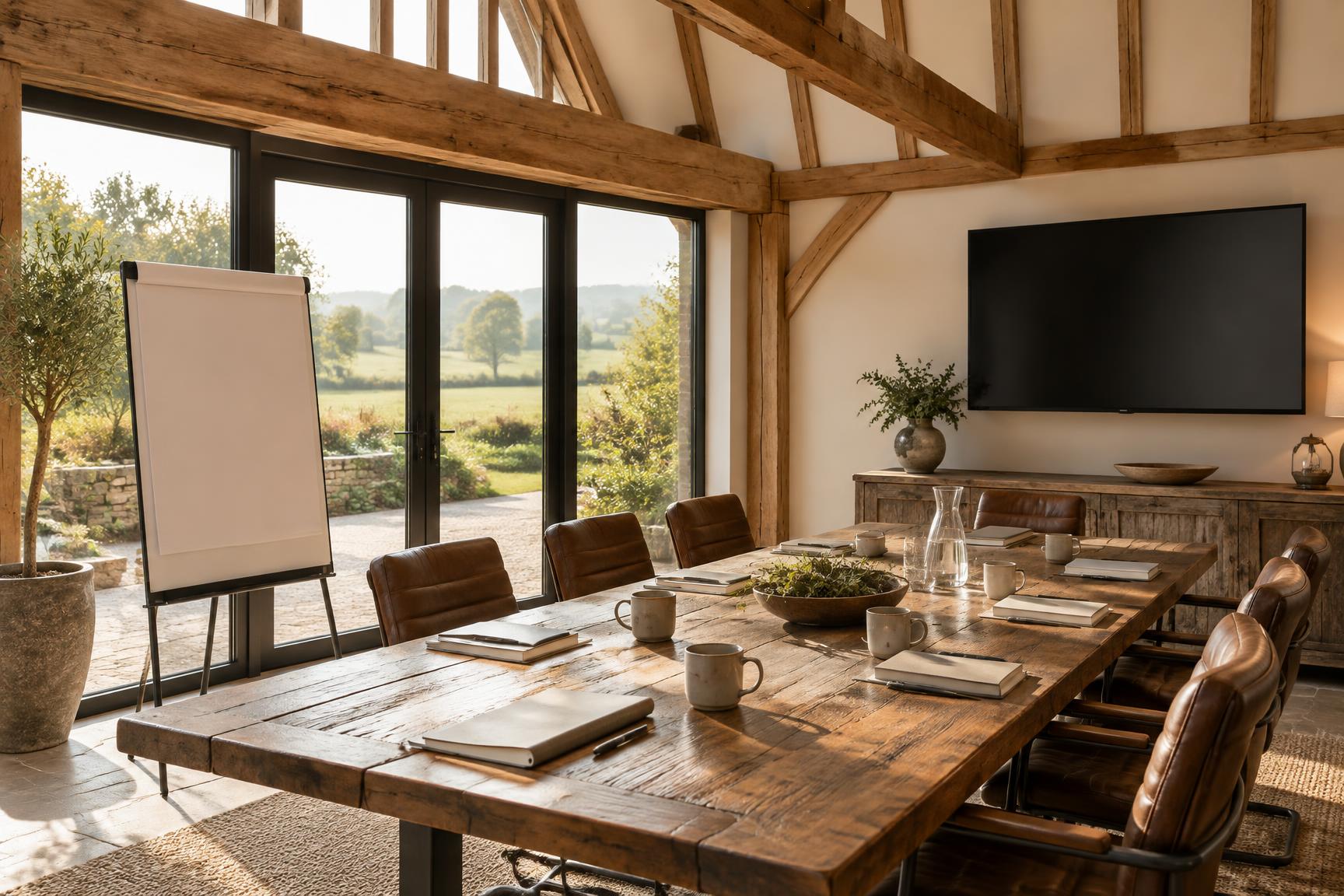
Ask a planner what separates a serious corporate retreat venue from a simply pretty one and the answer is rarely the architecture. It is the itinerary. Companies do not just want a venue, they want a structure that makes a short midweek escape work: sessions that go somewhere, food that needs no managing and an evening the team is still talking about at the next quarterly meeting.
Below is a worked example of a two-night midweek corporate agenda, drawn from the way well-run offsites actually flow. Use it to pressure-test what your venue can genuinely deliver, hour by hour, before you put a corporate page live.
Day one: arrive to a working space, not a waiting room
The single highest-value detail in a midweek itinerary is early access. Teams arrive from midday and go straight into the event space, while bedroom check-in opens later in the afternoon, commonly around 4pm. That split means the first working session starts before anyone has unpacked, and nobody spends the afternoon hovering by the luggage.
It also gives the venue a natural rhythm to host: a welcome and orientation at midday, a first session or a walk of the grounds, then rooms opening at 4pm. Evening one should be deliberately low-effort. A chef-prepared meal ready to heat and serve, with no shopping, no prep and no washing up for the group, turns arrival night into a genuine switch-off rather than an unmanaged visit to the kitchen.
Day two: the working day, done properly
The core of any offsite is a room that supports real work. That means a large meeting space with a complimentary flip chart, pens and paper, a sizeable TV screen for presentations, and somewhere to spread out when the group splits: breakout spaces, a lounge, a dining room pressed into service as an annexe. Companies increasingly look for this zoning rather than one room doing everything.
Lunch is where many agendas quietly fail. The strongest versions run as a generous buffet, a spread of sandwiches, savouries and desserts that people graze on between sessions, with dietary requirements handled in advance so nobody has to ask twice. Then, critically, protect the afternoon. Free time is not wasted time: it is when a walk around the grounds, a swim, a tennis court or simply a nap happens, and it is part of why teams describe the trip as a retreat rather than another meeting.
The evening is the memory. A private chef serving a bespoke three-course meal removes the group from any logistical thinking, and an experience with a bit of theatre, an immersive murder mystery night is a current favourite, closes the day with the team laughing together rather than drifting back to their laptops.
Day three: a tidy, generous departure
The last day should end cleanly. Bedrooms are checked out mid-morning, but the event space often stays available until early afternoon, commonly 1pm. That gives the team a final session, a relaxed breakfast and a proper goodbye rather than a rushed pack-up at 9am.
State these timings explicitly on your corporate page. A planner reading that bedrooms are available from 4pm and the event space stays open until 1pm on departure day can build a two-day agenda in their head immediately. A venue that leaves timings vague, or delivers a hard 10am stop on the last morning, loses the enquiry to the listing that spelled it out.
What this itinerary tells you about corporate demand
Look at the pattern across the three days: early event space access, staggered bedroom check-in, effortless catering on arrival night, a properly equipped working day, protected free time, one memorable evening and a late departure. None of it requires new buildings. It requires a venue to package what it already has into hours, rooms and food, and to describe it in the same language planners use.
It is also worth remembering why companies repeat the pattern. Corporate teams book by the quarter and the half-year, and a midweek slot that fits an existing cadence becomes a fixture in the calendar. The venue that delivers one smooth itinerary tends to get the same enquiry again in six months.
- Early event space access with a later bedroom check-in
- A meeting room with flip chart, screen and breakout space named specifically
- Buffet lunch with dietary requirements handled in advance
- A genuinely effortless first-night dinner
- One evening experience the team will talk about afterwards
- A departure window that keeps the event space until early afternoon
Plan the itinerary, then make your venue findable
If you are planning a retreat and want an agenda like this mapped to real venues, Company Offsites builds corporate retreat itineraries around its UK collection, from the working day to the evening experiences in between.
If you run a venue and want companies arriving with briefs like this one, that is Midweek Method's work: building the corporate page, the search visibility and the enquiry flow that bring midweek bookings directly to you. Company Offsites is Midweek Method's partner collection, so the two sides of the market meet in the middle.